


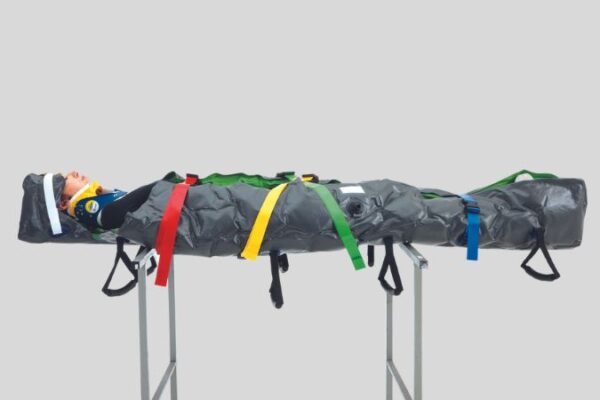
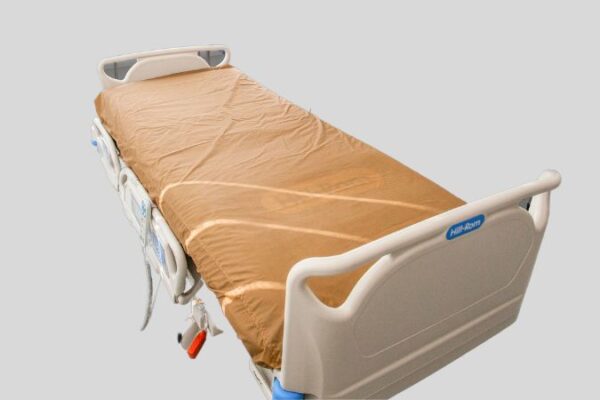
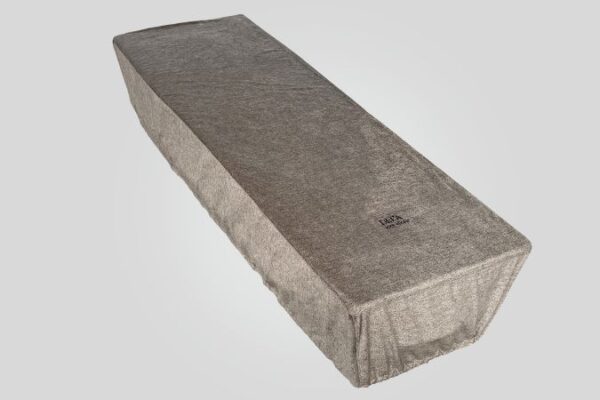

A question we are hearing more often is this: how do you evacuate bedbound or non-ambulant people when there is no evacuation sheet fitted underneath the mattress?
It happens more often than many people realise. Sometimes because of the type of mattress. Sometimes because of budget decisions or phased implementation. And sometimes simply because not every bed has been structurally equipped for evacuation.
In these situations, you do not want staff to improvise under pressure. You need a method that is safe, controlled and realistic in practice. Especially when evacuation routes are narrow, or when both horizontal and vertical evacuation may be required during an emergency.
Why an Evacuation Sheet Cannot Always Be Used
In practice, there are several reasons why an evacuation sheet may not be fitted underneath the mattress, for example:
- the type of mattress, such as specialist pressure-relieving mattresses or alternating air mattresses
- budget limitations or phased implementation across departments
- internal policy or organisational agreements
- practical circumstances, such as a temporary bed, changing occupancy, or an evacuation sheet not being available or installed
The conclusion is always the same: even without an evacuation sheet, there must be a realistic way to evacuate bedbound patients, residents or service users.
A Practical Evacuation Mattress Technique Without Manual Lifting
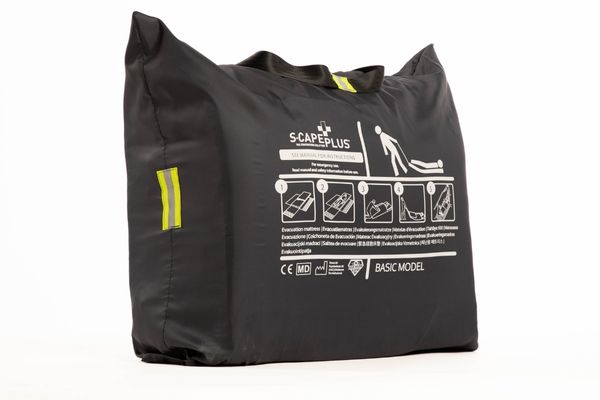
That is why we created a short technique video showing how to evacuate a person directly from the bed using an evacuation mattress, when there is no evacuation sheet underneath the mattress.
This video was produced in collaboration with Filip Buckens and Heidi Deconinck, two well-known Belgian ergonomics specialists.
The principle behind the technique is simple: do not lift — create a controlled transfer.
First, the upper body is guided over the edge of the bed. This allows gravity to do most of the work, instead of forcing care staff to lift the person manually. The method is especially useful when space is limited and a quick, controlled evacuation is needed.
Who Is This Technique For?
This technique is intended for people who cannot leave the danger zone independently due to reduced mobility. For example, people who cannot safely use stairs during an emergency.
In healthcare and long-term care settings, mobility classifications are often used to assess evacuation needs. This technique can be used for people in mobility classes B, C, D and E.
Typical settings include:
- hospitals and rehabilitation centres
- elderly care and nursing homes
- mental health facilities
- disability care settings
- secure or custodial care environments
Practical Points to Keep in Mind
As with every evacuation technique, there are clear conditions for safe use. These are the most important points:
Preferably, this technique is carried out by two members of staff. Depending on the situation and risk assessment, it may also be performed by one trained caregiver.
Further practical points:
- if needed, first move the person closer to the edge of the bed using the bed sheet
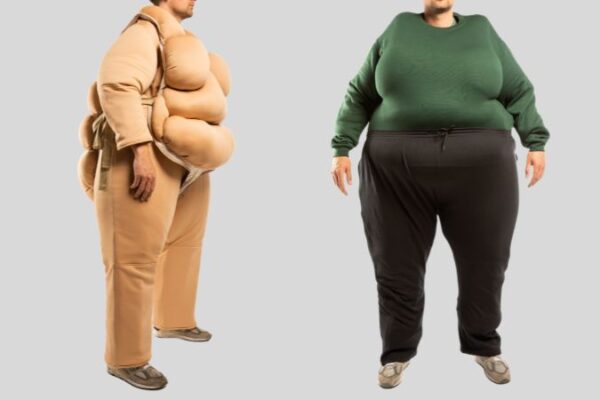
- for heavier individuals, a slide sheet can help create a more controlled movement towards the edge of the bed
- always protect the head during the transfer
- always guide the upper body over the edge of the bed first, also when working with two caregivers
- use gravity to your advantage instead of relying on manual lifting
Video 1: Evacuating Directly From Bed With One Caregiver
Video 2: Evacuating Directly From Bed With Two Caregivers
Questions About Training or Implementation?
Would you like advice on how to implement this technique within your organisation?
Contact Tetcon and one of our evacuation specialists will be happy to help.
Call: +31 40 298 99 55
Email: info@tetcon-ge.com
Looking for more practical videos on how to use Tetcon evacuation equipment?
Discover our Digital Evacuation School.